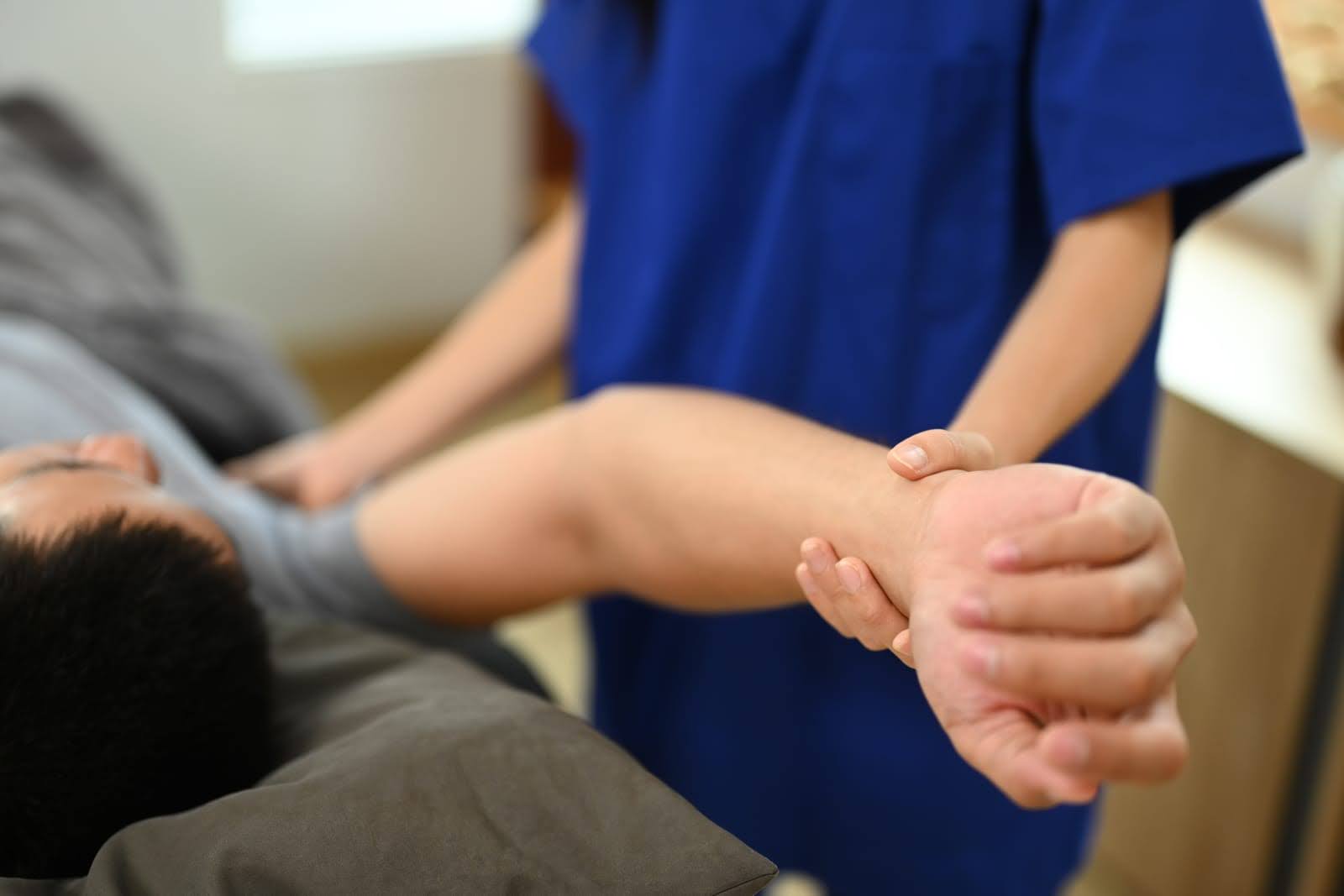
Discover why full-thickness rotator cuff tears cannot naturally repair themselves. Learn about the hidden risks of waiting, even when your pain subsides, and when modern keyhole surgery is the best option to save your shoulder's strength and function.


Patients frequently ask if a rotator cuff tear will heal without intervention, often comparing it to a muscle strain or a sprained ankle that improves with rest. While symptoms can certainly become more manageable over time, the structural reality is different.
The short answer is that a full-thickness rotator cuff tear will not heal on its own. Once the tendon has detached from the bone, the body cannot naturally bridge the defect. Here is why the rotator cuff is biologically distinct from other tissues, and the specific risks associated with leaving a tear untreated.
To understand why these tears persist, it is necessary to look at the anatomy. The rotator cuff is a group of four muscles and tendons that surround the shoulder joint, keeping the ball centred in the socket. When a tendon tears, whether from acute trauma or chronic degeneration, two biological factors prevent spontaneous healing:
1. Hypovascularity (poor blood supply) Rotator cuff tendons have a naturally compromised blood supply, particularly in a specific area known as the critical zone. Blood carries the oxygen, platelets, and growth factors required for tissue repair. Unlike a muscle belly, which is rich in blood vessels and heals rapidly, the white tendon tissue is relatively avascular. Without a robust blood supply, the body cannot generate the new tissue needed to bridge a tear.
2. Retraction The rotator cuff muscles are under constant tension. When the tendon tears, the muscle acts like a released rubber band, pulling the tendon end away from the bone. Unlike a broken bone where the two ends can be immobilized in a cast, a torn tendon is constantly being pulled further apart by the muscle’s resting tone. Over time, this gap widens. A small tear can progress into a massive, retracted tear that is technically difficult to advance back to its original insertion point.
This is often the most confusing phase for patients. It is common for the acute pain of a tear to settle after a few weeks as the inflammation (synovitis) inside the joint subsides. A patient may assume that because the pain has gone, the injury has healed. This is incorrect. The absence of pain often indicates that the shoulder is simply compensating. You may unknowingly be using other muscles, such as the deltoid, to lift the arm. While this masks the symptoms in the short term, the mechanical defect remains and often enlarges in the background.
If a tear is ignored for months or years, two irreversible changes occur within the shoulder:
1. Tear progression Small tears often become large tears. As the gap widens, the remaining tendon becomes thinner and weaker, making any future repair more precarious.
2. Fatty atrophy This is the critical factor in surgical decision-making. If a muscle is not attached to bone, it ceases to function. When a muscle is inactive, it wastes away. Over time, the healthy red muscle fibre is replaced by fat. Once fatty atrophy is established, it is irreversible. Even if the tendon is surgically repaired later, a fatty muscle will never generate normal strength. This is why guidelines from the British Elbow & Shoulder Society (BESS) often favour early repair, to preserve the muscle while it is still viable.
Not every patient requires an operation. For elderly patients with low physical demands, conservative management involving physiotherapy and steroid injections can be effective at managing symptoms. However, surgical repair is generally recommended if:
Modern repair is performed as an all-arthroscopic (keyhole) procedure. Using incisions of less than 1cm, we insert a high-definition camera and specialized instruments to grasp the torn tendon and anchor it firmly back to the bone. This halts the retraction process, prevents fatty atrophy, and restores the mechanical integrity of the shoulder. Most patients are treated as day cases and return to driving within 6 weeks.
Waiting for a rotator cuff tear to heal naturally is biologically unrealistic. While pain levels may fluctuate, the tear will likely persist and can cause permanent damage to the muscle over time. If you suspect a tear, the gold standard for diagnosis is an ultrasound or MRI scan. Establishing the size of the tear allows for an informed decision before irreversible changes occur. Think you might have a tear? Do not wait for the muscle to waste away. Read more about our [rotator cuff repair process here] or [Book a consultation] to arrange a consultation with Mr Baring.