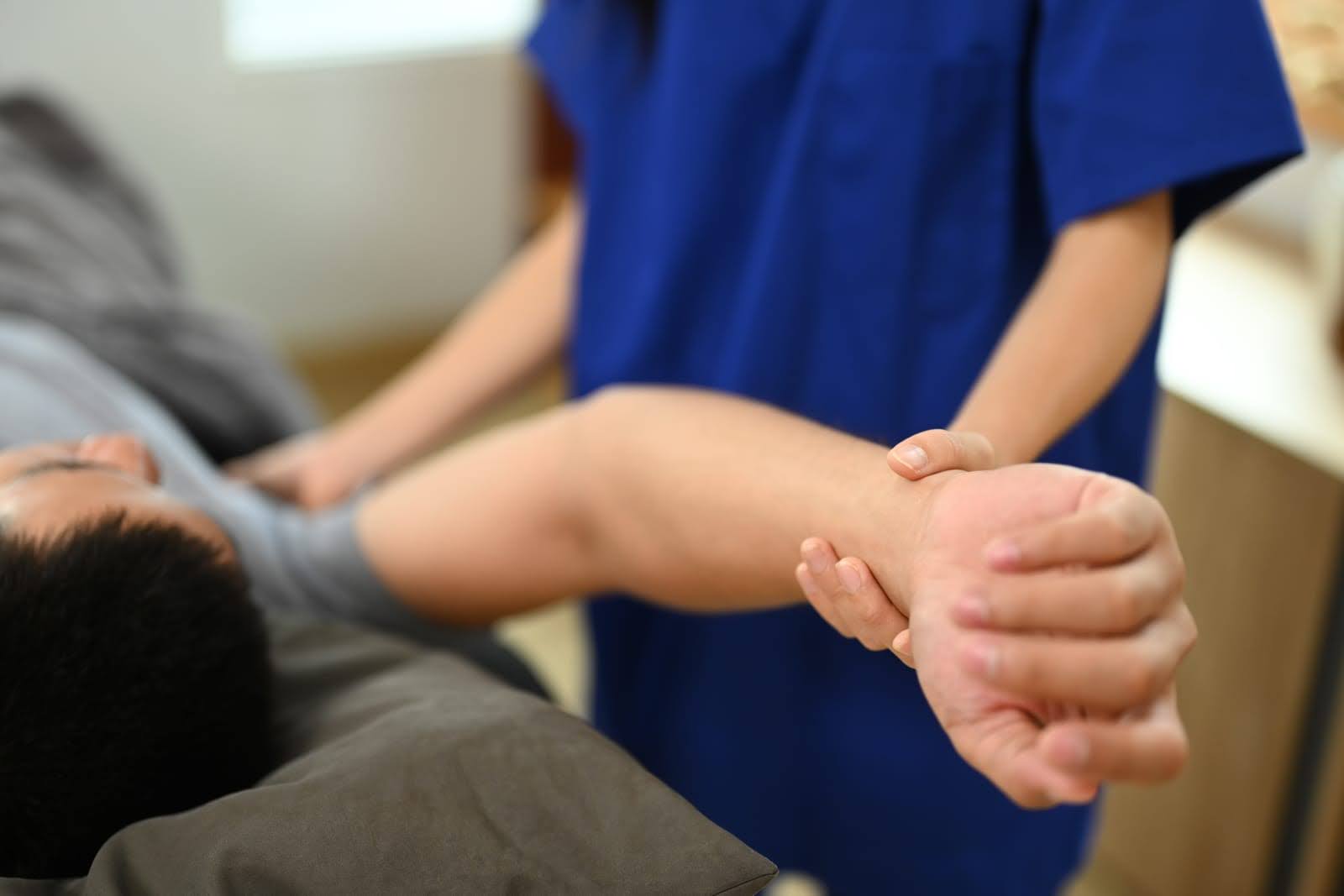
Most broken shoulders heal without an operation. A London shoulder surgeon explains what decides between a sling and surgery, and what recovery looks like either way.


If you have just been told you have a broken shoulder, the question you want answered before anything else is whether you are heading for an operation. Here is the honest answer: most people are not.
The large majority of broken shoulders are treated in a sling, with painkillers and physiotherapy, and heal perfectly well without anyone opening the shoulder. Surgery is reserved for the smaller group where the broken pieces have moved far enough out of position that leaving them would cost you function, or where the fracture is unstable and will not hold or heal.
This guide explains what decides which group you are in, what each route involves, and how long recovery takes either way. If you have already been told you need fixation and are choosing between implants, our companion piece covers plate vs nail for a fractured proximal humerus.
Three bones meet at the shoulder, and any of them can break.
The proximal humerus. The top of the upper arm bone, which forms the ball of the ball-and-socket joint. This is what most people mean by a broken shoulder, and what A&E will have written on your discharge letter as a fractured or displaced proximal humerus. It usually happens in a fall onto an outstretched hand or onto the point of the shoulder.
The clavicle. The collarbone, the strut running from the breastbone to the shoulder. Common in cycling falls and contact sport.
The scapula. The shoulder blade. Uncommon, and usually the result of a heavier impact, which is why these injuries are assessed carefully for other damage.
This guide focuses on the proximal humerus, because it is by far the most common and the one where the surgery question comes up most.
In A&E you will have had X-rays and been put in a sling, often a collar-and-cuff or a broad arm sling, and given pain relief. That is the right immediate treatment for almost every one of these fractures, whether or not surgery follows.
Often a CT scan is performed, particularly if the X-rays show the fragments have moved. A plain X-ray flattens a three-dimensional problem, and a CT shows how many pieces there are, where they sit, and whether the ball has split or come out of the socket. That scan carries most of the weight in the decision that follows.
There is no single measurement that settles it. A shoulder surgeon weighs several things together:
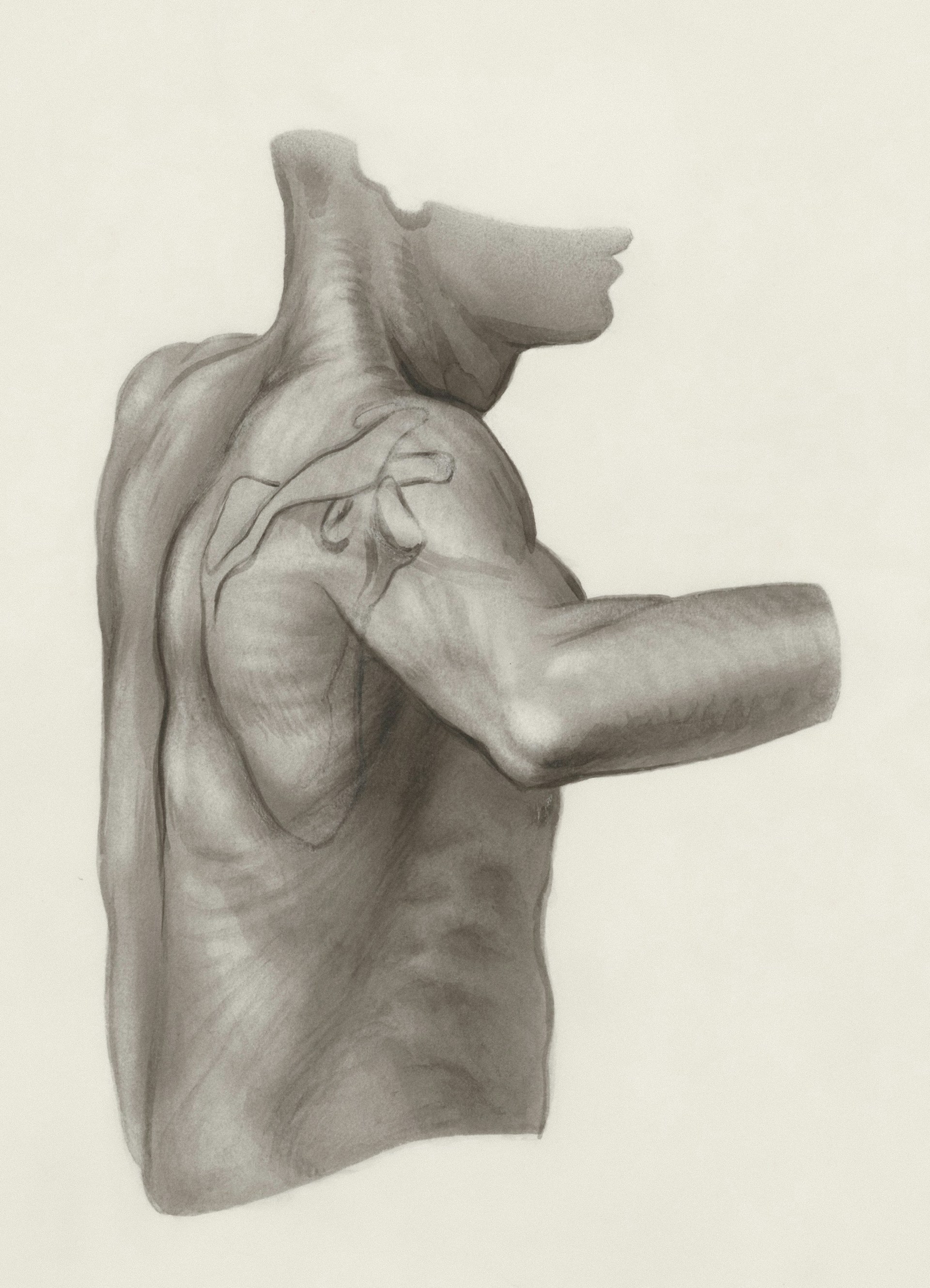
Treatment without an operation is not a lesser option, and it is not doing nothing. It has a structure:
If the position drifts on a follow-up X-ray, the plan can change, which is why those early check-ups are worth keeping.
Where surgery is needed, there are broadly two things it can do.
Fix the fracture. The pieces are put back and held, either with a plate on the outside of the bone or a nail down the inside of it. Which implant suits depends on the fracture pattern, and we cover that comparison in detail in plate vs nail.
Replace the joint. When the head of the humerus is broken into too many pieces to reconstruct reliably, or its blood supply has been destroyed by the injury, fixing it can be the wrong answer. In that situation a shoulder replacement, usually a reverse replacement in older patients, gives a more predictable result. You can read more on the shoulder replacement surgery page and in our guide to anatomical vs reverse shoulder replacement.
All shoulder surgery carries risk. For fracture work that includes infection, stiffness, ongoing pain, nerve or blood vessel injury, blood clots, anaesthetic complications, failure of the fracture to unite, and the possibility of further surgery. The injury itself can also damage the blood supply to the humeral head, which can cause the bone to collapse over the following months regardless of how well the fixation was done. Mr Baring will go through the risks that apply to your fracture before you decide anything.
If you have X-rays or a CT scan and want to know which route your fracture falls into, that is what a consultation answers. It is an assessment, not a commitment to surgery. You can book an appointment with Mr Baring here.
This is the thing that surprises people most, and it is worth saying plainly.
The aim of treating a broken shoulder is a shoulder that moves, works and does not hurt. It is not an X-ray that looks tidy. Fractures that heal slightly out of their original shape can still give excellent function, and shoulders fixed to look immaculate on film can still end up stiff if the movement work does not happen. Surgeons who have treated a lot of these injuries watch the shoulder, not just the picture.
That is why the recommendation you get should be about what the operation will change for you, rather than about correcting an image. An operation is worth having when it will genuinely give you a better working shoulder than the sling would. When it would not, the sling is the better treatment, not the consolation prize.
The second honest point: whichever route you take, stiffness is the problem to fear, not the fracture. Shoulders seize quickly after an injury, and getting them moving at the right moment, not too early and definitely not too late, does more for the final result than almost anything else. That job belongs to you and your physiotherapist.
In my experience
What do you wish patients with a new proximal humerus fracture understood in the first fortnight?
The most common thing I have to undo in clinic is the belief that a sling means nothing is being done. Patients arrive expecting either an operation or neglect, and the sling route is neither. It is an active treatment with a timetable, and the fortnight after the injury is when it is decided. I want the elbow, wrist and hand moving from the first day, pendulum exercises started early, and the pain relief taken properly so that movement is possible. The people who do well after a broken shoulder, operated on or not, are the ones who got moving at the right moment. The ones who protect the arm rigidly for six weeks give me a united fracture and a stiff shoulder, and the stiffness is the harder problem to solve.
Both routes follow a broadly similar arc, because both are waiting on the same bone. Your own plan will be set by Mr Baring and your physiotherapist.
Weeks 0 to 2. Sling most of the time, including at night. Regular pain relief. Hand, wrist and elbow moving from the start. Pendulum exercises usually begin in this window. Sleep is easier propped up than flat.
Weeks 2 to 6. The sling comes off progressively during the day. Assisted movement increases, guided by physiotherapy and by the follow-up X-rays. The fracture is becoming sticky rather than solid, so no lifting or pushing.
Weeks 6 to 12. Most fractures are united enough to move the arm under its own power. Physiotherapy shifts from protecting to restoring range. Driving usually becomes possible in this window, once you can control the wheel confidently, and desk-based work is generally manageable well before that.
Months 3 to 6. Strengthening, and a return to most normal activity. Heavier lifting and overhead work come back later than daily tasks. There is usually still some significant stiffness which may need to be directly addressed by physiotherapy or special injections into the joint known as hydrodistension.
Months 6 to 12. Continued gains in strength and comfort. Shoulders after a fracture typically keep improving for around a year, and mild aching or end-of-range stiffness that is still there at six months often keeps softening.
Contact your GP, the hospital team or A&E promptly if you develop:
These are uncommon, and they are worth acting on quickly rather than waiting for your next appointment.
Fractures are one of the few shoulder problems where timing genuinely changes the options. Once the pieces begin uniting in the position they are in, the choice narrows, and after a few weeks it has largely been made for you. If you have been diagnosed in A&E and are waiting several weeks for a fracture clinic appointment to find out whether you need an operation, having the scans reviewed sooner is a reasonable thing to want.
Mr Baring sees fracture patients in London, usually within days, and can review your existing X-rays or arrange a CT scan. There is more on this part of his practice on the trauma and fracture management page. A consultation is an assessment, and for most broken shoulders it ends with a rehabilitation plan rather than an operation. Consultations are covered by all major private medical insurers, including Bupa, AXA Health, Aviva and Vitality, and self-paying patients are welcome.
Book an appointment or call 07561 812 682.
Will my broken shoulder need surgery? Most do not. The majority of proximal humerus fractures are treated in a sling with physiotherapy. Surgery is considered when the fragments have moved significantly, when the tuberosities have been pulled out of place by the rotator cuff, when the head is split or dislocated, or when the fracture will not hold its position.
How long does a broken shoulder take to heal? The bone usually unites in around six to twelve weeks. Getting movement and strength back takes longer, commonly the better part of a year, and that part depends more on physiotherapy than on the fracture.
How long will I be in a sling? Usually around two to four weeks for a fracture treated without surgery, and a similar period after fixation, though you will be taken out of it for exercises well before that. Wearing it longer than advised tends to cause stiffness rather than prevent problems.
When can I drive after a broken shoulder? Usually somewhere between six and twelve weeks, once you are out of the sling and can control the wheel confidently, including in an emergency. Mr Baring will give you guidance specific to your fracture, and you should check your motor insurer's position.
Can I sleep in a bed with a broken shoulder? Yes, and most people find the first few weeks more comfortable propped up on pillows or in a recliner rather than lying flat. Keep the sling on at night early on. Our guide to shoulder pain at night has practical positions that help.
What happens if a broken shoulder is left untreated? Fractures heal whether or not they are supervised, but they heal in whatever position they are left in, and shoulders stiffen quickly when they are not moved. If there is significant displacement which is not corrected, there may be long-term loss of function and pain.
Mr Toby Baring is a consultant orthopaedic surgeon specialising in shoulder and elbow surgery, with a particular interest in arthroscopic rotator cuff repair, shoulder instability surgery, fracture management and shoulder replacement.Read more about Mr Baringorbook an appointment.