A practical week-by-week guide to recovering from keyhole shoulder surgery: the sling, sleeping, washing, driving, work, physiotherapy milestones and the signs worth acting on.

The most useful thing to understand before keyhole shoulder surgery is that your recovery is set by what was done inside the shoulder, not by the size of the cuts on the outside. Three small incisions can mean four weeks of taking it steady or twelve months of committed rehabilitation, depending entirely on the operation.
So this guide gives you two things: the recovery pattern your particular operation follows, and then a week-by-week walk through what the whole thing actually looks like, including the practical business nobody warns you about, like washing your hair and getting a shirt on.
Your own plan comes from Mr Baring and your physiotherapist, and it takes precedence over anything here.
Almost every keyhole shoulder operation falls into one of three patterns.
If you are not sure which you are having, or you are still deciding between keyhole and open surgery, keyhole vs open shoulder surgery covers the ground. If you have not been assessed yet, a consultation will tell you which of these recoveries applies to you, and it is an assessment rather than a commitment to surgery. You can book an appointment with Mr Baring here.
The description below follows a repair-type operation, the most demanding of the three, and notes where a release or a minor procedure differs.
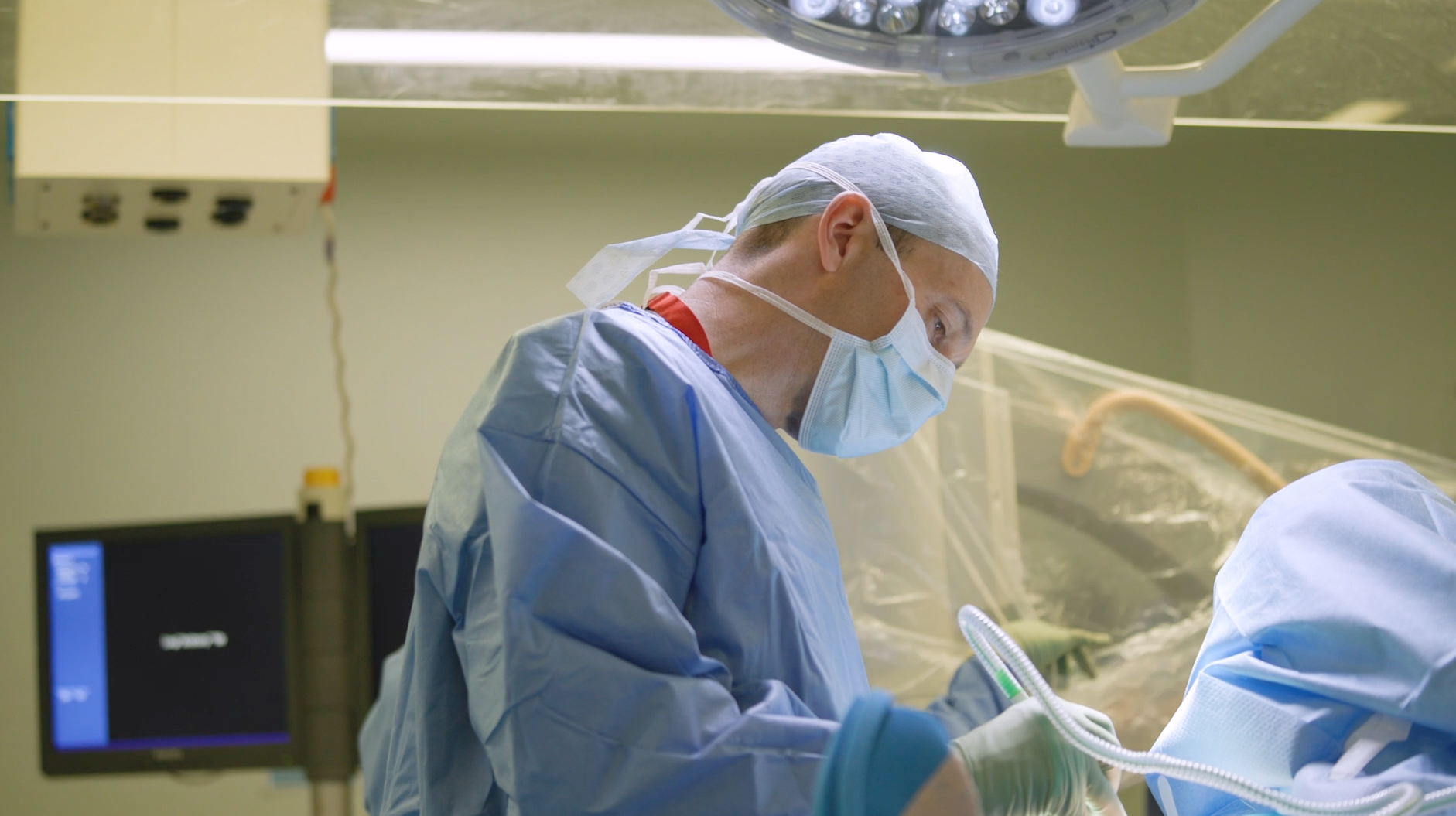
You arrive, usually a few hours before, and go home the same day in most cases. You will have a general anaesthetic and, in most shoulder operations, a nerve block in the neck that numbs the shoulder and arm.
You will wake with the arm already in a sling and, thanks to the block, in very little pain. That comfort is borrowed rather than free. Start your pain relief before the block wears off rather than waiting for it to, because catching up on pain is harder than staying ahead of it.
Have someone with you for the first twenty-four hours. You cannot drive, and the anaesthetic makes the evening hazier than people expect.
The block wears off somewhere between twelve and thirty-six hours, and this is usually the sorest stretch. Take the pain relief on the schedule you were given rather than only when it hurts.
The dressings usually can come off after a week, and the small wounds are typically closed with dissolving stitches or paper strips. Bruising can track down the arm and towards the chest, which looks worse than it is.
Practical life is the theme of week one.
Most people take the first week off work entirely, whatever their job.
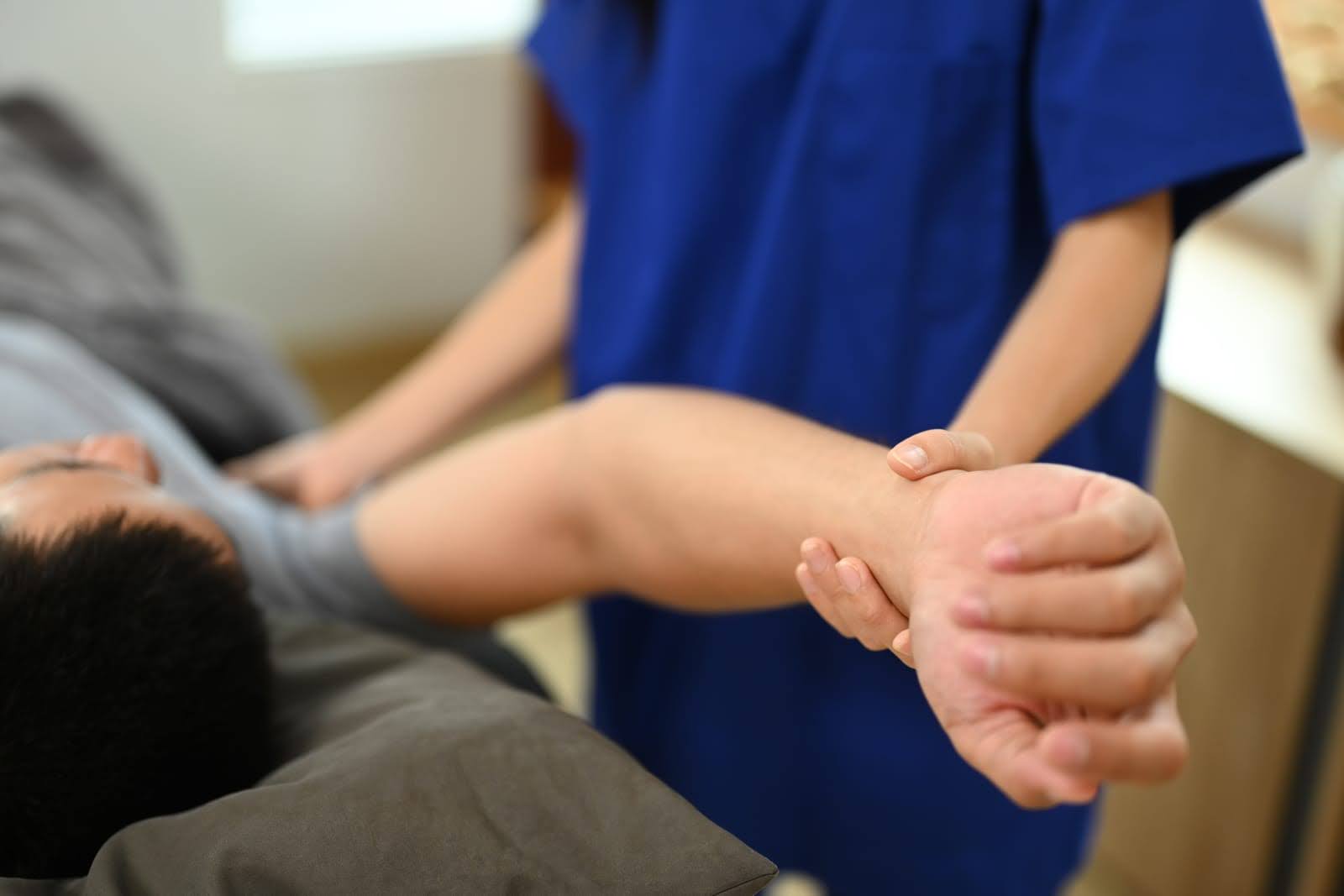
Pain is usually settling into stiffness and aching rather than sharpness. Physiotherapy is often under way: assisted movement after a repair, active movement after a release.
Desk-based work often becomes possible in this window, particularly from home with the sling on. Short days first. Fatigue is the thing that catches people out, not pain.
Apart from rotator cuff repairs, the sling can often be removed most of the time now. After a cuff repair, you are still in it, though you will be coming out of it for exercises and washing.
The shoulder feels stiff and weak, and that is expected. Range is being restored gradually and deliberately. This is the stage where people who feel better start to overdo it, and the repair does not yet know that you feel better.
The sling usually comes off for good after a cuff repair somewhere in this window, and it tends to feel like a bigger moment than it sounds. Sleep normally improves noticeably once you are out of it.
Driving becomes possible for many people from around now, depending on the operation, once you are out of the sling and can control the wheel confidently, including in an emergency. Check your motor insurer's position as well as your surgeon's.
The repaired tissue is becoming secure and physiotherapy shifts from protecting to loading. You start using the arm under its own power for normal light activities, then adding resistance.
Manual and overhead work usually returns later than this, commonly at around three months or with a phased return. Swimming, gym work and racquet sports come back progressively rather than all at once.
The strengthening phase, and the one that quietly decides your result. The shoulder is out of the danger zone and no longer sore enough to force you to pay attention, which is exactly why it gets neglected.
Golf, swimming, tennis and gym pressing generally return during or after this window, guided by strength rather than by the calendar.

Continued gains. Shoulders keep improving for a good year after surgery, which surprises most patients. Where your shoulder is at four months is not where it will finish. Contact sport after a stabilisation is usually cleared somewhere around six to nine months, on the basis of tested strength and control.
Almost everyone treats the day the sling goes in the cupboard as the end of the recovery. It is closer to the halfway point.
By the time the sling comes off, your tissue has healed enough to be safe. It has not been rebuilt. The strength, control and endurance that make a shoulder feel like yours again are built in the months afterwards, in unglamorous sessions with a resistance band that produce no dramatic before-and-after moment. Patients who stop when the pain stops usually end up with a shoulder that works but does not feel right. Patients who see the strengthening months through are the ones who forget which shoulder it was.
The second honest point is about the incisions. Three small marks are a poor guide to what happened inside. A tendon stitched back to bone through a keyhole portal takes the same months to heal as one repaired through an open incision. The keyhole approach makes the journey in and out kinder. It does not shorten the biology, and any recovery timeline that promises otherwise is selling something.
In my experience: Mr Toby Baring
At what point in recovery do patients most often go wrong, and what do you tell them about it beforehand?
The risky moment is not the first fortnight, when everyone is careful because it hurts. It is around weeks four to eight, when the pain has gone and the shoulder feels usable again. That is when people carry shopping, lift a suitcase into a car boot or pick up a grandchild, and that is when a repair gets tested before it is ready. I warn everyone about that window before they have the operation, because feeling better arrives well before being better. The other thing I say is that the shoulder keeps improving for a year. People judge their result at three months and worry. Three months is not the verdict.
Contact the clinic, your GP or, out of hours, urgent care if you develop:
These are uncommon, and they are all better dealt with early than left over a weekend.
If you are preparing for surgery, or you are partway through a recovery that is not going the way you expected, it is reasonable to want a clear answer rather than a wait. Mr Baring sees patients in London, usually within days, including people who have had surgery elsewhere and want a second opinion on where they are.
Consultations are covered by all major private medical insurers, including Bupa, AXA Health, Aviva and Vitality, and self-paying patients are welcome.
Book an appointment or call 07561 812 682.
How long does recovery from keyhole shoulder surgery take? It depends on the operation. Minor procedures such as a decompression often mean one to two weeks of taking it steady and a full recovery of 6 to 8 weeks. A rotator cuff repair means a sling or brace for four to six weeks, physiotherapy for several months and a return to heavier activity from around three to six months. A capsular release means a sling for comfort and immediate movement, with most people back to normal daily activity within six to twelve weeks.
How long do I wear the sling? Usually four to six weeks after a cuff repair, around 1-3 weeks after a stabilisation and capsular release. You will be shown how to come out of it safely for exercises and washing well before it goes for good.
How should I sleep after keyhole shoulder surgery? Propped up at around thirty to forty-five degrees on a wedge or stacked pillows, or in a recliner, with a folded pillow supporting the elbow so the arm is not dragged backwards. Keep the sling on at night for as long as you have been told to. Broken sleep for the first few weeks is normal and improves steadily.
When can I drive after keyhole shoulder surgery? Often two weeks to four weeks after most procedures, although six to eight weeks after a cuff repair, once you are out of the sling and can control the wheel confidently in an emergency. Your surgeon's advice and your motor insurer's position both apply.
When can I go back to work? Desk-based work commonly at one to two weeks after most procedures, and two to four weeks after a cuff repair, sometimes sooner from home. Manual or overhead work usually needs around three months or more, often with a phased return.
When can I lift weights or go back to the gym? Lower body and core work often restart early with your physiotherapist's agreement. Loaded upper body work, particularly pressing and overhead lifting, generally waits until the strengthening phase from around three to six months, and returns by progression rather than on a date.
Mr Toby Baring is a consultant orthopaedic surgeon specialising in shoulder and elbow surgery, with a particular interest in arthroscopic rotator cuff repair, shoulder instability surgery and shoulder replacement.Read more about Mr Baring or book an appointment.