If your shoulder keeps dislocating, surgery can stabilise it. A London shoulder surgeon explains the standard keyhole repair, why it fails more often than people expect, and the keyhole bone block alternative.


If your shoulder has come out more than once, or it now feels as though it might come out every time you reach behind you, the problem is no longer bad luck. The first dislocation damaged the structures that hold the joint in place, and they haven't healed again.
Surgery can stabilise it, and in the UK that usually means one particular operation: a keyhole (arthroscopic) repair in which the torn rim of cartilage around the socket, the labrum, is stitched back to the bone through small incisions. It is a day-case operation and it is by far the most common stabilisation procedure in this country.
It is not the only option, and for some shoulders it is not the most reliable one. Mr Baring also performs a keyhole bone block procedure, which rebuilds the bone of the socket itself instead of relying on repaired soft tissue. This guide explains why shoulders keep dislocating, what each operation involves, how often each tends to fail and in whom, and how the choice between them is made.
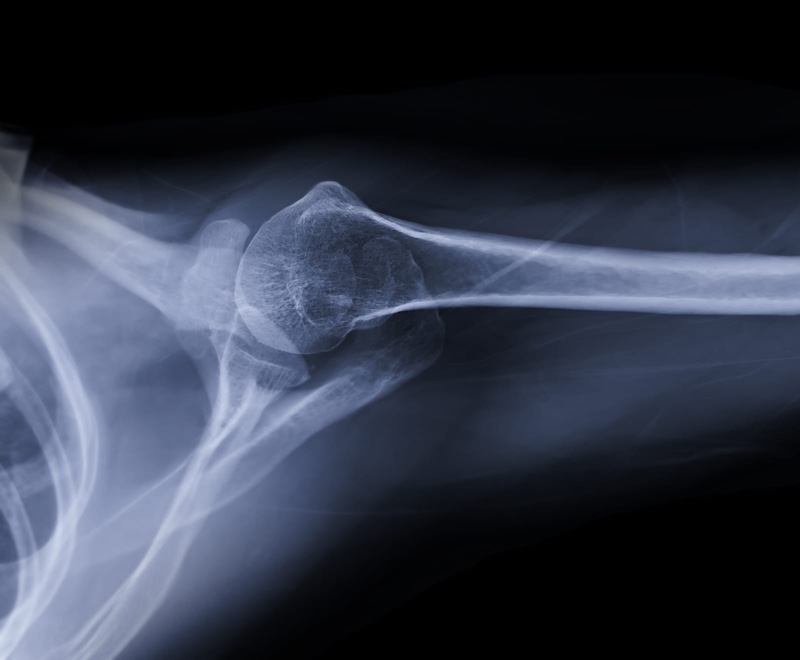
The shoulder is the most mobile joint in the body, and it pays for that mobility with stability. The socket, called the glenoid, is small compared with the ball and close to flat, more of a flat disc than a cup. It is deepened a little by the labrum, a rim of fibrous cartilage that acts like the bumper on a snooker table, and the ligaments of the capsule and the surrounding muscles do the rest.
When the shoulder dislocates, most commonly forwards, the labrum is usually torn off the front of the socket. That injury is known as a Bankart lesion. The ligaments attached to it stretch at the same time, and the ball can dent itself against the rim of the socket on the way out, a Hill-Sachs lesion. With repeated dislocations, bone can also be worn or broken away from the front of the socket, making a flat disc smaller still.
Once that has happened, the shoulder comes out more easily each time, and each dislocation tends to take less force than the one before. Recurrence is especially common in younger patients. Our guide to anterior vs posterior shoulder dislocation explains the directions this can happen in, and shoulder dislocation: signs, causes and how to fix it covers what to do when it first happens.
Not everyone gets full dislocations. Some shoulders subluxate, meaning they slip partway and go back on their own, and some simply feel unreliable. That sense of the shoulder being about to go, usually with the arm out and rotated back, is called apprehension, and it counts. There is more on this pattern in shoulder instability: when your shoulder keeps giving way.
Surgery is considered when the instability is affecting your life and is unlikely to settle on its own. In practice that means recurrent dislocations, ongoing apprehension that has you protecting the arm and avoiding things you used to do, or a first dislocation in a younger, active patient, where the risk of it happening again is substantially higher.
The scan matters as much as the story. An MRI scan with contrast shows the labrum and ligaments, and a CT scan shows how much bone has been lost from the socket and how deep any dent in the ball is. What the imaging shows shapes not just whether to operate but which operation to do.
Physiotherapy is not a token first step. For some patterns of instability, particularly where the shoulder is generally loose rather than injured, a properly directed rehabilitation programme is the treatment, and surgery would be the wrong answer. A good assessment separates the two.
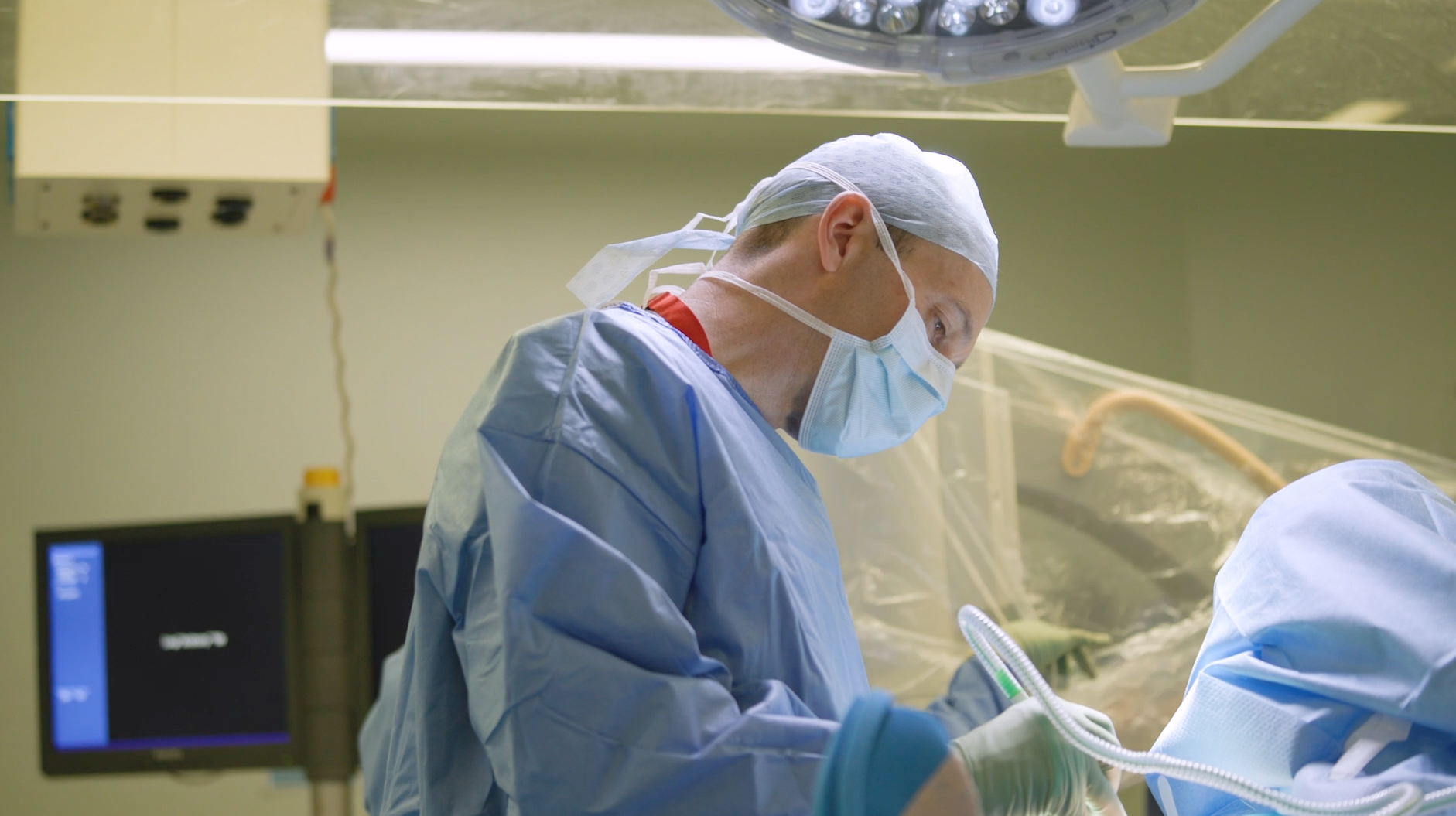
The conventional keyhole stabilisation, often called an arthroscopic Bankart repair, reattaches the torn labrum to the front of the socket. Through two or three incisions of under a centimetre, the joint is inspected, the torn tissue is freed, and small anchors in the rim of the socket hold stitches that pull the labrum and the stretched capsule back onto the bone. Where the ball has a significant dent, a step called remplissage can fill it.
It is done as a day case under general anaesthetic with a nerve block, it leaves small scars, and it gives most patients who have it a stable, functional shoulder. There is a fuller clinical description on our stabilisation of the shoulder page, and keyhole vs open shoulder surgery explains the technique itself.
The recovery is the drawn-out part. The repaired tissue has to be protected while it heals, so rehabilitation is deliberately gradual, and return to contact sport commonly takes six to nine months.
Most articles present the keyhole labrum repair as the modern answer and stop there. The more useful thing to know is what it asks of your shoulder.
The repair stitches soft tissue back to the edge of a nearly flat socket, then asks that tissue to hold against the same forces that tore it off in the first place. In older, lower-demand patients it usually does. In younger, more active people, and especially in collision sports, a meaningful proportion of repaired shoulders go on to dislocate again, and the younger and more active the patient, the more often that happens. This is worth knowing as we look at the options.
There has long been a more reliable alternative. A bone block procedure takes a block of bone graft and fixes it to the front of the socket, widening and deepening it. Instead of asking stitched tissue to hold the ball in, it changes the shape of the joint so the ball sits in a deeper socket. Re-dislocation after bone block surgery is much less common than after a labrum repair, and because bone heals to bone more strongly than ligament heals to bone, rehabilitation can move faster.
So why is it not offered more often? Traditionally the bone block was an open operation, done through a larger incision with screws holding the graft, and that version carries real drawbacks: a higher infection risk than keyhole surgery, dissection close to the nerves that run to the arm, and screws sitting near the joint surface that can damage cartilage or need removing later. Because of those risks, most UK surgeons reserve the bone block for shoulders where a repair has already failed. The practical effect is that many patients only hear about the more reliable operation after the less reliable one has let them down.
If you have been offered stabilisation surgery and want to understand which operation actually fits your shoulder, an assessment with up-to-date imaging will tell you. It is an assessment, not a commitment to surgery. You can book an appointment with Mr Baring here.
Over the last few years a newer technique has been developed that delivers the bone block through keyhole surgery, and this is the operation I prefer for many patients with recurrent instability.
The graft comes from the outer end of the collarbone (the distal clavicle) on the same side. This is one of the few pieces of bone the shoulder can spare: surgeons have removed it for decades in other operations, for example for arthritis of the joint on top of the shoulder, without affecting how the shoulder works. It is harvested through a small incision at the top of the shoulder, then passed into the joint arthroscopically and fixed to the front of the socket with small metal buttons that work like rivets, rather than screws.
The aim is to keep what makes the bone block reliable, the rebuilt socket, while avoiding what made the open version risky: there is no open dissection near the nerves, no screws near the joint surface, and the scars are small. The trade-offs run the other way. It is a technically demanding operation that fewer surgeons perform, and it is a newer technique, so the published follow-up behind it is shorter than for the open bone block or the labrum repair. It is still surgery, with the risks that carries, and it is not the right operation for every unstable shoulder.
In my experience: Mr Toby Baring
You prefer the keyhole bone block for many unstable shoulders. Why, when the labrum repair is the standard?
The shoulder dislocates because the socket is a small, flat disc trying to hold a large ball. A labrum repair stitches soft tissue to the edge of that disc and asks it to hold against the same forces that tore it off. A bone block changes the geometry instead: it widens and deepens the socket, so the shoulder stays in because of its shape rather than its stitches. Bone also heals to bone more predictably than ligament heals to bone, which is why the rehabilitation can be quicker. In the UK the bone block is usually held back until a ligament repair has failed. My view is that if one operation is the more reliable one, the time to discuss it is before any surgery, not after a failed repair.
Your plan will be tailored by Mr Baring and your physiotherapist, and there is a fuller general guide in recovery after keyhole shoulder surgery. The two operations recover differently, and the difference comes from what is healing.
After a keyhole labrum repair, stitched soft tissue is healing to bone, and it has to be protected. A sling for around three weeks, with the arm kept out of the position that stresses the repair. External rotation is deliberately held back while the tissue heals, strengthening builds from six to twelve weeks, non-contact sport returns over three to six months, and contact and collision sport commonly return somewhere around six to nine months, cleared on tested strength and control, not on the calendar.
After a keyhole bone block, bone is healing to bone, which is a stronger and more predictable process, so the rehabilitation programme is usually accelerated. The sling is worn for comfort over a shorter period, movement starts earlier, and many patients are back to full activity between three and six months, some towards the earlier end of that window. The pace is set by how the graft is healing and how the shoulder performs, and Mr Baring will map it out for your sport and your job.
Desk-based work is usually manageable within a few weeks of either operation, sometimes earlier from home, and driving returns once you are out of the sling and can control the wheel confidently.
Neither operation is risk-free. Both carry the risks similar to any shoulder surgery: infection, stiffness, ongoing pain, temporary numbness or weakness from the nerve block, blood clots and anaesthetic complications.
After a labrum repair the particular risks are recurrent instability, which is more likely in young patients returning to collision sport or where bone has been lost, a small permanent loss of external rotation, and problems with the anchors. After a bone block the particular risks relate to the graft, which can move or fail to heal in a small number of cases, and to the fixation. The open version adds the approach-related risks described above, including injury to the nerves near the front of the shoulder and screws that are difficult to remove if they cause trouble. The keyhole version avoids those, and it remains a technically demanding operation that should be done by a surgeon experienced in it.
Mr Baring will go through the risks that apply to your shoulder, your scan and your sport before you decide anything.
If your shoulder has dislocated more than once, or you have stopped trusting it, an assessment will tell you what has been damaged and which operation, if any, fits your anatomy and your life. Some patterns of instability are better treated with a properly directed rehabilitation programme, and it is an assessment, not a commitment to surgery.
Mr Baring sees patients in London, usually within days, and can arrange the imaging needed to make the decision properly. There is more about this work on the sports injuries page. Consultations are covered by all major private medical insurers, including Bupa, AXA Health, Aviva and Vitality, and self-paying patients are welcome.
Book an appointment or call 07561 812 682.
What is the difference between a Bankart repair and a bone block? A Bankart repair stitches the torn labrum and stretched capsule back to the rim of the socket, so it restores the soft tissue. A bone block fixes a piece of bone to the front of the socket, making the socket itself wider and deeper. The repair depends on tissue healing and holding; the bone block changes the shape of the joint.
How many dislocations before I need surgery? There is no fixed number. Two or more dislocations, or one dislocation followed by persistent apprehension in a younger, active person, is usually enough to have the conversation. What the scan shows about the labrum and the bone matters more than the count.
Will my shoulder dislocate again after surgery? It can after any stabilisation. The risk is highest after a labrum repair in young patients returning to collision sport, which is exactly the group in which a bone block is worth discussing before any surgery. No operation removes the risk entirely.
Is the keyhole bone block the same as a Latarjet procedure? No, though they share the same principle. The Latarjet is the traditional open bone block, which transfers a piece of bone called the coracoid and fixes it with screws. The keyhole bone block uses a graft from the end of the collarbone, placed arthroscopically and held with small buttons instead of screws, so the open approach is avoided.
When can I go back to rugby, judo or climbing? After a labrum repair, contact sport usually returns somewhere around six to nine months. After a keyhole bone block the rehabilitation is usually accelerated and return often comes earlier, within three to six months for many patients. In both cases clearance rests on tested strength and control, and returning early increases the risk of failure.
Can a dislocated shoulder heal without surgery? The dislocation itself is treated by putting the shoulder back, and many shoulders settle with rehabilitation, particularly in older patients. What does not heal is the detached labrum, which is why recurrence is common. Rehabilitation is the right first treatment for a large proportion of people.
Mr Toby Baring is a consultant orthopaedic surgeon specialising in shoulder and elbow surgery, with a particular interest in arthroscopic rotator cuff repair, shoulder instability surgery and shoulder replacement.Read more about Mr Baring or book an appointment.