Smaller incisions and less disturbance to the muscles around the shoulder. For some operations it also means less blood loss, a shorter operation, or no second operation to remove metalwork.
Minimally invasive vs open surgery: incisions of about 1cm, plus one of about 3cm for some techniques, instead of one long incision.
What this means: Less cutting through the muscles around the shoulder. It is still a real operation, with recovery measured in weeks to months.
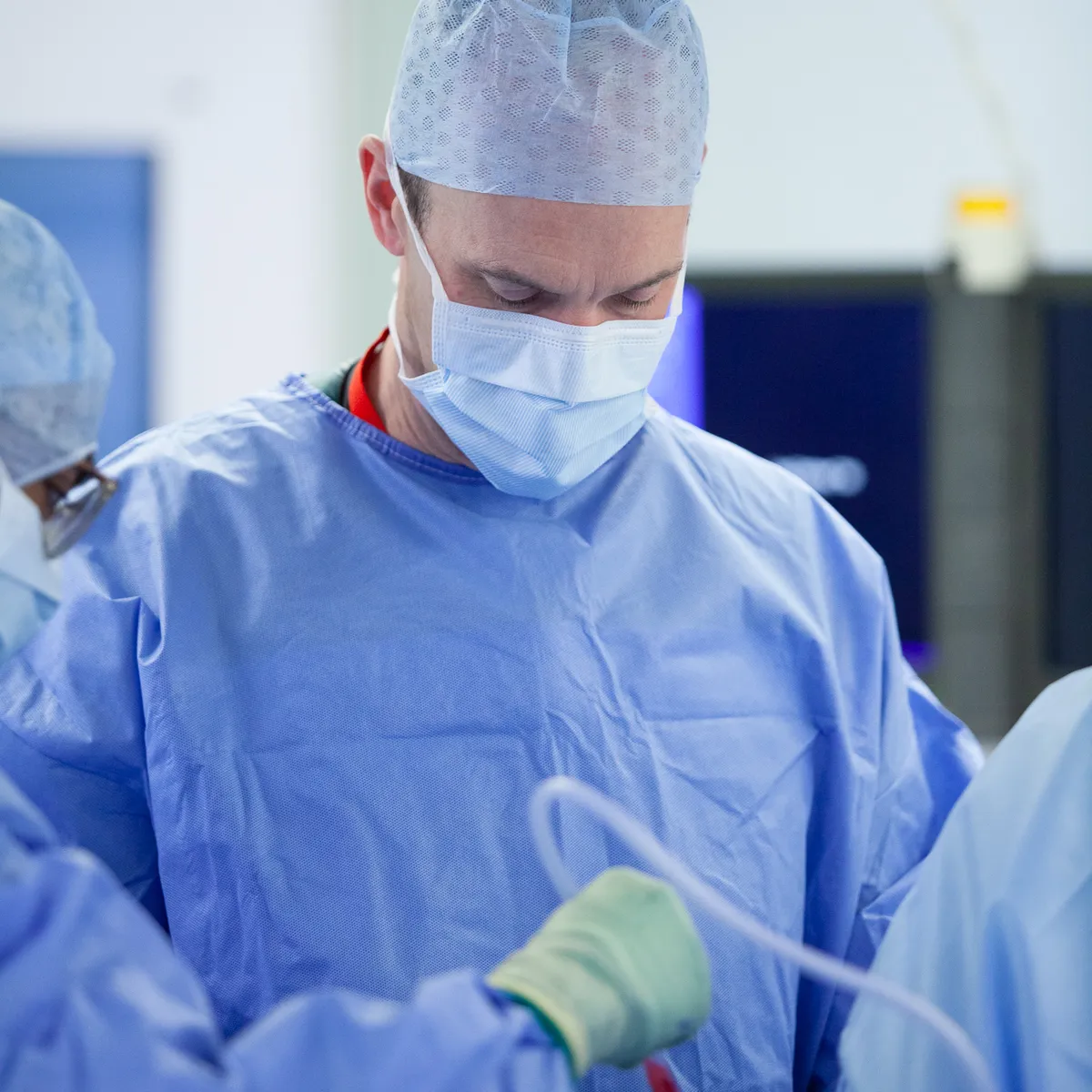
Keyhole incisions are about 1cm. Some techniques add one incision of about 3cm.
Mr Baring's technique documents
Nails have been linked with less blood loss and shorter operations than plates for broken shoulders.
J Orthop Surg Res 2019
Tightrope implants and the PHAST procedure leave no plate that has to be removed later.
Eur J Orthop Surg Traumatol 2015
An operation done through small incisions, usually about 1cm, using a camera and fine instruments. Some techniques use one incision that is smaller than in the usual open operation.
It disturbs less of the muscle around the shoulder, and scars are usually small.
It is still a real operation, with real risks, and recovery is measured in weeks to months.
It does not make bone or tendon heal faster. Healing takes the time it takes, whatever the size of the incision.
Keyhole vs open shoulder surgery →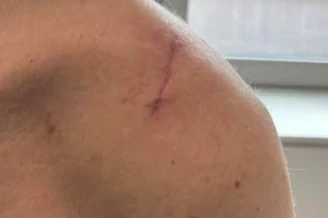
Scar 4 months after surgery.
Repeat shoulder dislocation
Aims to stop your shoulder dislocating again, through keyhole incisions and no screws.
Full details on lower recurrence rate →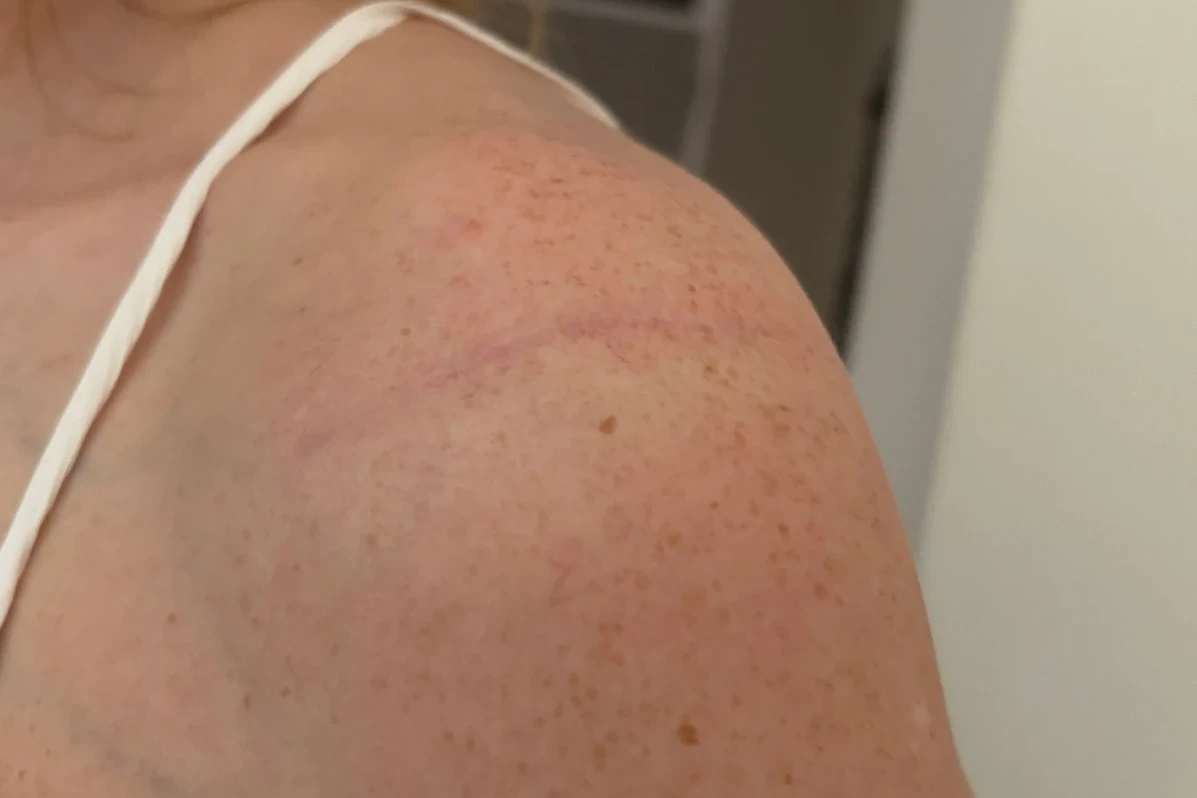
Scar 6 months after surgery.
Broken shoulder (valgus impacted fracture)
No metalwork left in, through a smaller incision than plating.
Implant-free fixation
Full details on accelerated recovery →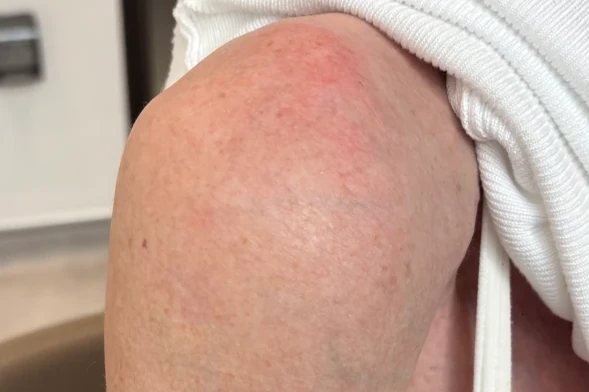
Scars after nail fixation.
Broken shoulder (proximal humerus fracture)
Less blood loss and a shorter operation than plating, through 3 or 4 incisions of about 1cm.
Full details on accelerated recovery →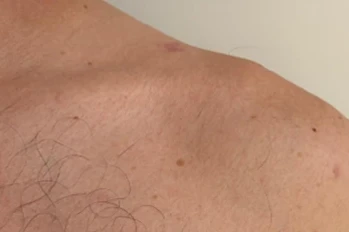
Scars after tightrope fixation.
Broken collarbone (lateral clavicle fracture)
The procedure is done through three small incisions (5 to 10mm each), with no need for removal of a hook plate.
Full details on accelerated recovery →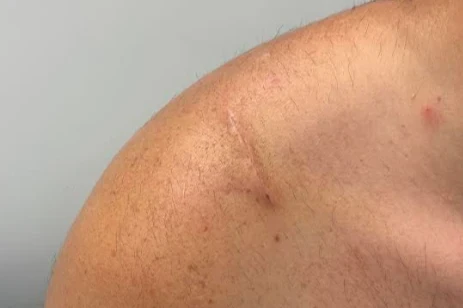
Scar after tightrope repair.
Separated shoulder (AC joint dislocation)
The procedure is done through one small incision (3cm) and two further keyhole incisions (5mm), with no hook plate.
Full details on accelerated recovery →No. It depends on the injury and what needs repairing. Some problems are better treated with an open operation, and Mr Baring will explain which applies to you.
You will still have pain after surgery and need pain relief. How much varies between people and operations.
Usually small. Keyhole incisions are about 1cm. Some techniques also need one larger incision, for example about 3cm for an AC joint repair.
Some operations are, including keyhole bone block stabilisation, which is usually done as a day case. Others may need a night in hospital.
Infection, stiffness, nerve injury, and the repair not holding or healing. Mr Baring will go through the risks of your specific operation at your assessment.
An assessment is a chance to understand what is wrong and talk through every option, including not having an operation. Booking an assessment does not commit you to surgery.
Recognised by Aviva, AXA Health, Aetna, Bupa, Cigna Healthcare, Vitality, WPA, Simplyhealth, Allianz Care and Healix to treat their members. Please check your cover with your insurer before booking.
Initial consultation £350
Follow-up £250
Where you can be seen
One Welbeck
1 Welbeck Street, London W1G 0AR
King Edward VII's Hospital
Beaumont Street, London W1G 6AA
St John & St Elizabeth Hospital
60 Grove End Road, London NW8 9NH