Most shoulder fractures heal without surgery. When one is needed, Mr Baring uses small-incision and implant-free techniques, so that for collarbone, AC joint and some broken shoulder injuries there is no plate to remove in a second operation.
Accelerated recovery vs a hook plate: no second operation to remove the plate for collarbone and AC joint injuries.
What this means: A hook plate usually has to come out once the bone or ligaments heal. A tightrope stays in, so there is one operation to recover from, not two.
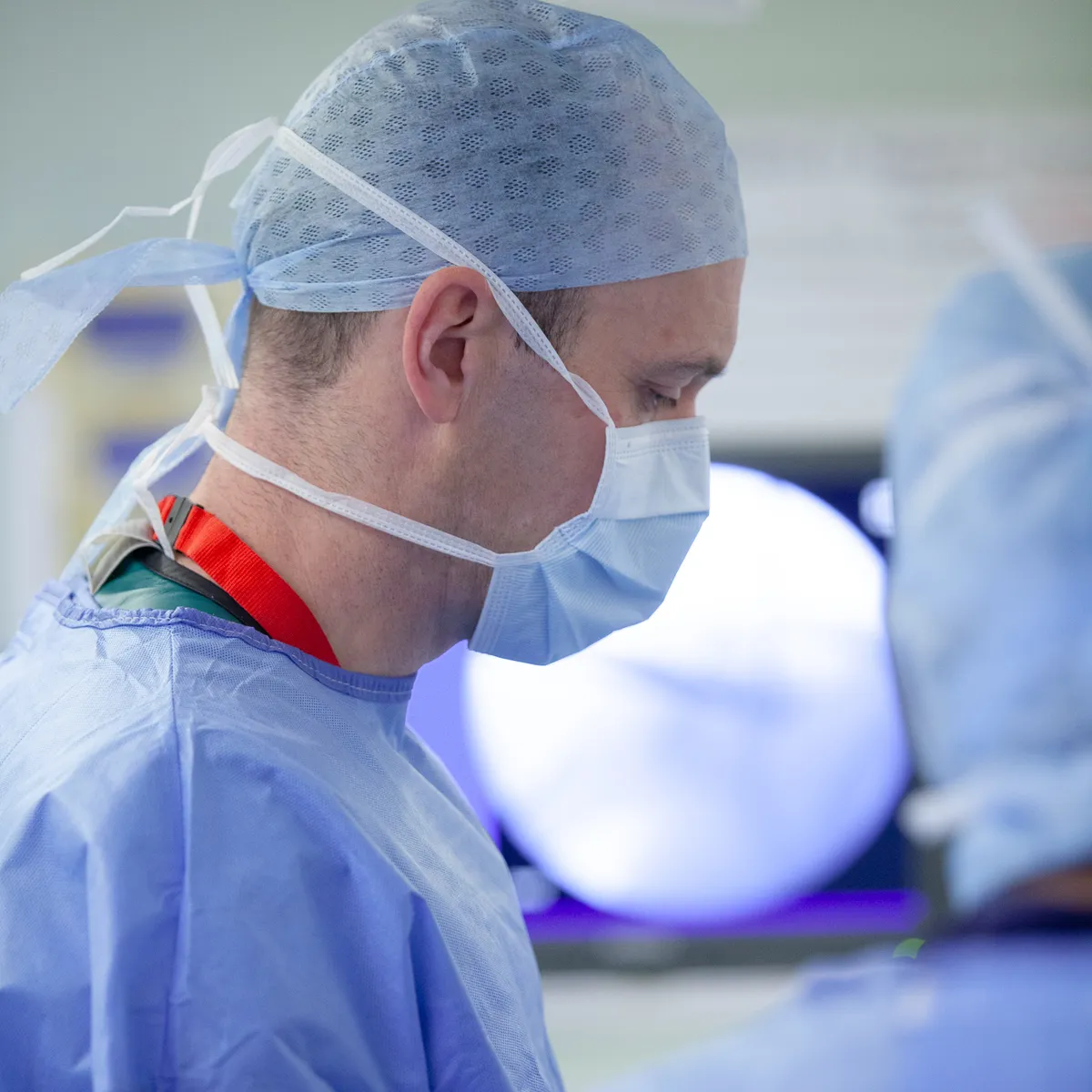
A hook plate usually has to come out once the bone heals. A tightrope stays in, so there is no second operation to recover from.
Eur J Orthop Surg Traumatol 2015
PHAST holds the fracture with sutures only, so there is no plate or screws to irritate the tissues.
Baring et al 2024
✓
You have broken the top of your arm bone (proximal humerus fracture)
✓
You were told in A&E you have a valgus impacted fracture
✓
You have broken the outer end of your collarbone (lateral clavicle fracture)
✓
You have a separated shoulder (AC joint dislocation)
✓
You have been offered a hook plate, or have one that needs removing
A UK trial, PROFHER, found that for most displaced fractures at the top of the arm bone (proximal humerus fractures), surgery gave no better results than a sling. Rangan et al, JAMA 2015 · PMID 25756440
Three things about the operation affect how much you have to recover from: the size of the incision, how much muscle is disturbed, and whether metalwork will need a second operation to remove it. Where a technique avoids a plate that has to come out, there is no second operation, so your overall recovery can be shorter.
What each operation is, who it may suit and the evidence behind it.
Implant-free fixation
PHAST implant-free fixation for a broken shoulder
Holds a broken shoulder with sutures while it heals, leaving no plate or screws behind.
01What it is
PHAST stands for Proximal Humerus All Suture Technique. It is used for a common break at the top of the arm bone called a valgus impacted fracture.
Strong sutures, anchored through the rotator cuff tendons, pull the fragments back into place and hold them while the bone heals. No plate or screws are used.
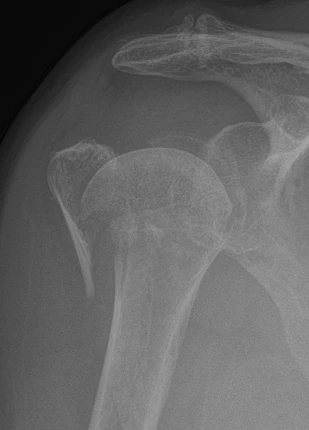
Before surgery: a valgus impacted fracture at the top of the arm bone.
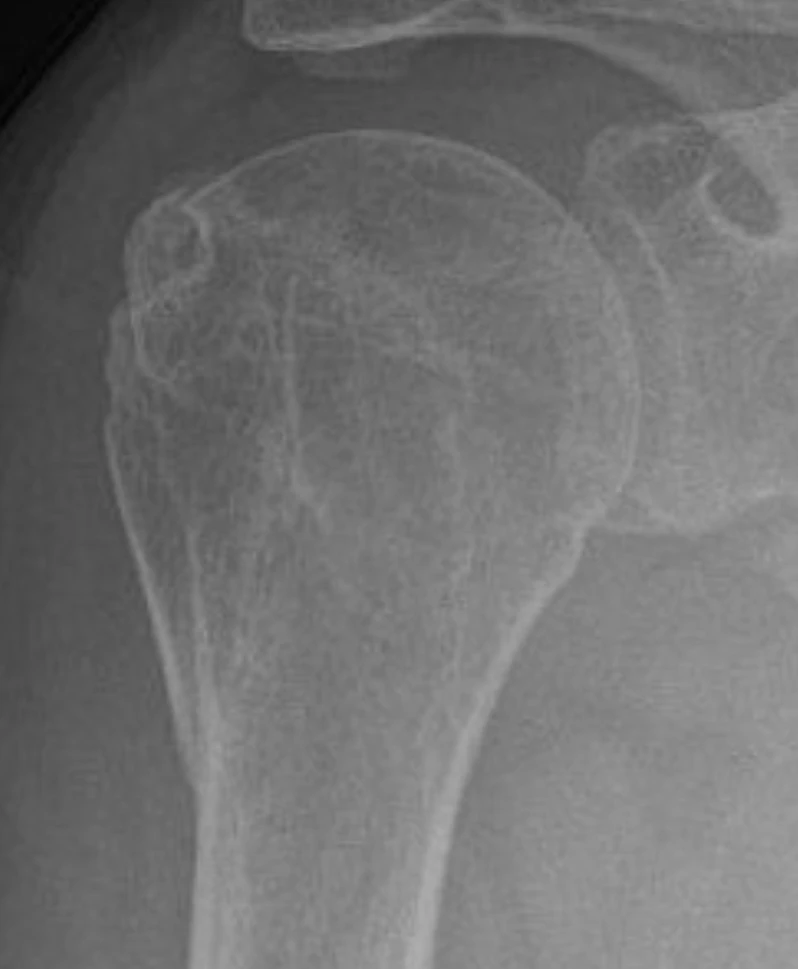
The same shoulder after PHAST fixation. The bone is held with sutures, so no metalwork shows on the X-ray.
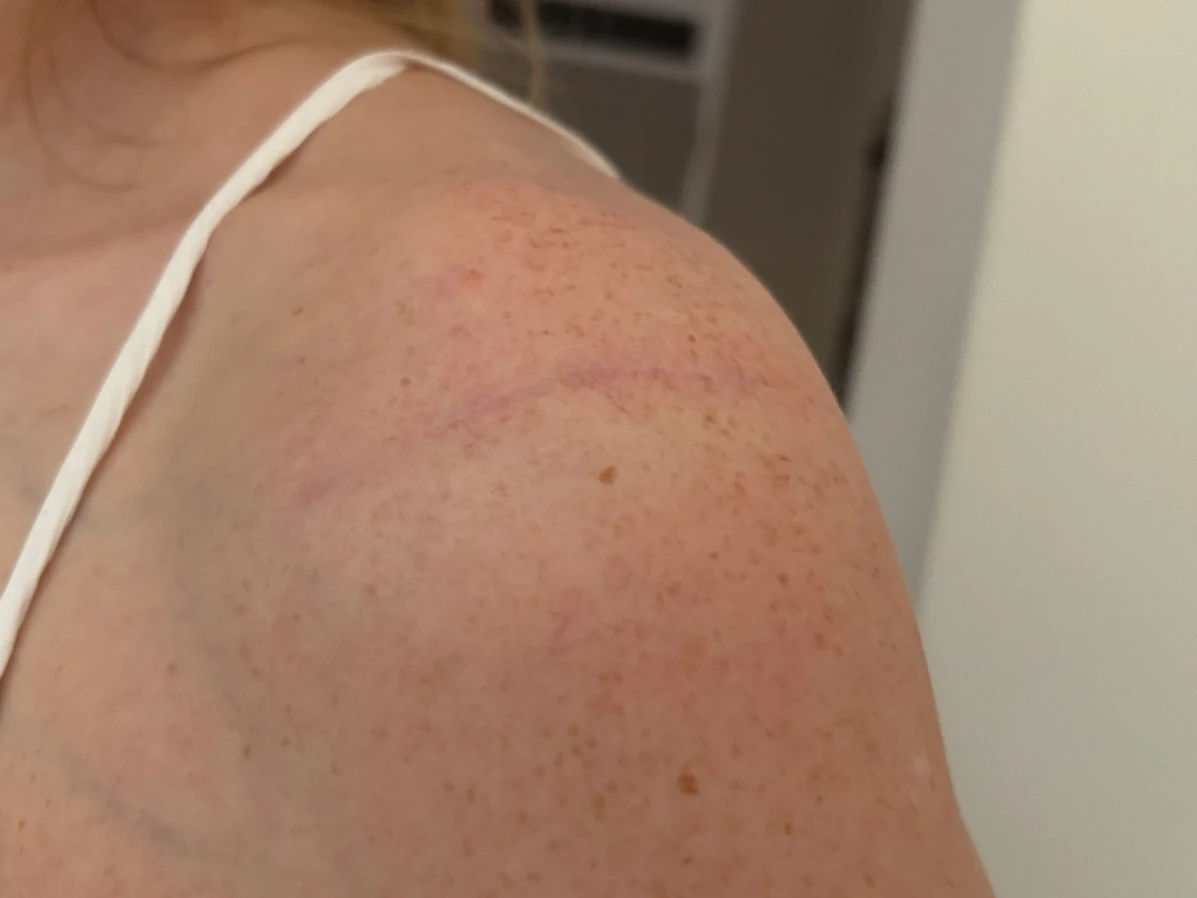
Scar 6 months after PHAST fixation.
02Who it may suit
Valgus impacted proximal humerus fractures that have moved enough to need surgery. Most proximal humerus fractures heal in a sling with physiotherapy.
03Compared with the usual operation
The usual operation fixes the fracture with a metal plate and screws. PHAST is done through a smaller incision than plating, with less release of muscle from the bone.
With no plate or screws, there is no metalwork to irritate the soft tissues or cause complications which lead to a further operation to remove the implant.
04The evidence
In the published series Mr Baring co-authored, all 15 fractures healed with no major complications.
It is a small series from a single centre, and PHAST has not been compared head to head with plating.
Intramedullary nailing for a broken shoulder
Fixes a broken shoulder through 3 or 4 small incisions, with less blood loss than a plate in published studies.
01What it is
A rod (intramedullary nail) is passed down the middle of the arm bone and locked in place with screws. It goes in through 3 or 4 incisions of about 1cm.
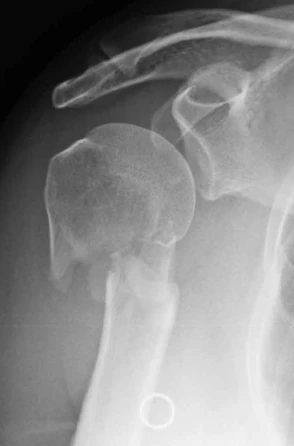
X-ray of a displaced fracture at the top of the arm bone.
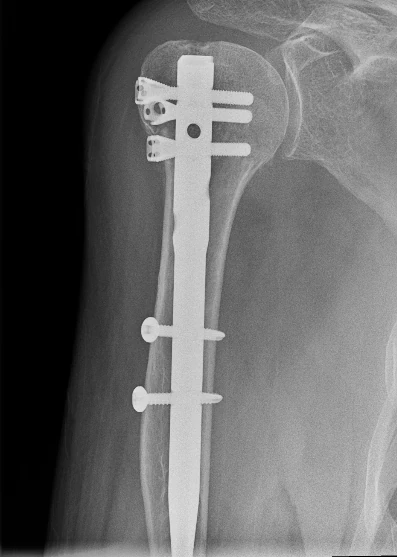
X-ray after fixation with a nail passed down the inside of the bone.
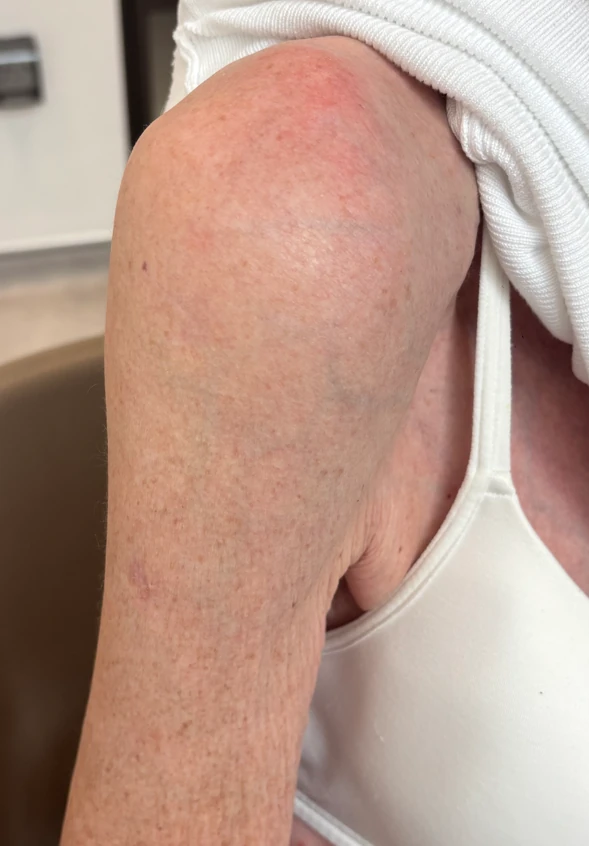
Scars after nail fixation.
02Compared with the usual operation
The alternative is a plate fixed to the side of the bone. Plates need a considerably longer incision and extensive muscle dissection and soft tissue releases.
03The evidence
Compared with locking plates, nails have been linked with less blood loss during surgery and shorter operations. One review pooled 38 mostly retrospective studies with 2,699 patients.
A review of randomised trials only found less blood loss and shorter surgery, but no difference in healing time or function.
Tightrope fixation for a broken outer collarbone
Holds a broken outer collarbone in line, with no hook plate to remove in a second operation.
01What it is
For breaks at the outer end of the collarbone (lateral clavicle fractures), often after falling off a bike onto the shoulder. These usually come with damage to the ligaments.
Two small metal buttons joined by strong suture (a tightrope) pull the bone into line while the ligaments heal. It goes in through three small holes of about 5 to 10mm, using keyhole methods. The tightrope stays in for life.
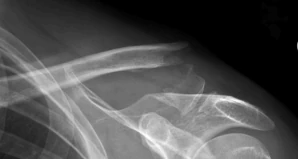
X-ray of a fracture at the outer end of the collarbone.
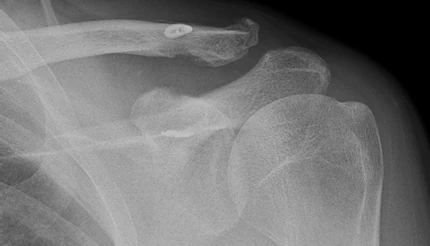
X-ray after tightrope fixation, showing the two small buttons.
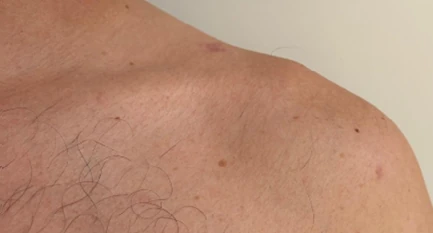
Scars after tightrope fixation.
02Who it may suit
Unstable fractures of the outer end of the collarbone.
03Compared with the usual operation
The usual alternative is a hook plate. Once the bone heals, typically after 8 to 10 weeks, the hook plate has to be removed in a second operation.
Because the tightrope does not need removing, there is no second operation to recover from.
04The evidence
In a comparison of tightrope and hook plate fixation for unstable outer collarbone fractures, healing and results were similar. Removing the plate was the main reason for further surgery.
Tightrope repair for an AC joint dislocation
Repairs a separated shoulder without a hook plate that later needs removing.
01What it is
For higher-grade AC joint dislocations, also called a separated shoulder, often after a fall from a bike onto the top of the shoulder.
Buttons joined by strong suture hold the collarbone in line while the ligaments heal. It goes in through one incision of about 3cm and two small holes.
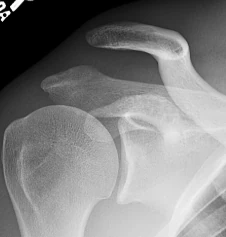
X-ray of an AC joint dislocation.
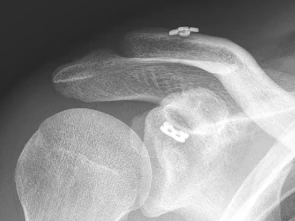
X-ray after tightrope repair, showing the two small buttons.
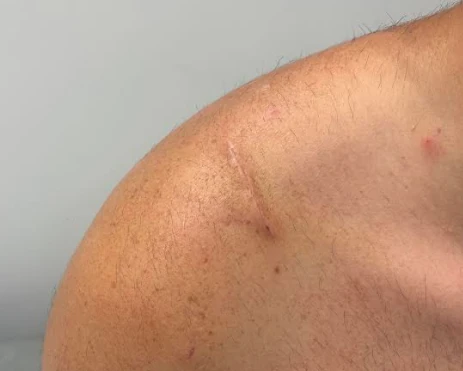
Scar after tightrope repair.
02Who it may suit
Higher-grade AC joint dislocations.
03Compared with the usual operation
The alternative is the hook plate, which requires a more extensive incision and a subsequent second procedure to remove the plate. The tightrope does not.
04The evidence
Reviews comparing tightrope with hook plates report similar overall results, with hook plates generally needing a second operation to remove them.
Published papers you can read in full or in summary on PubMed.
Baring et al, Shoulder Elbow 2024
Results of PHAST implant-free fixation in 15 broken shoulders.
Rangan et al, JAMA 2015 (PROFHER)
UK trial comparing surgery with a sling for displaced proximal humerus fractures.
J Orthop Surg Res 2019
Review comparing nails with locking plates for proximal humerus fractures.
Eur J Orthop Surg Traumatol 2015
Tightrope compared with hook plate for unstable outer collarbone fractures.
Lim et al 2025
Review of 12 studies comparing hook plate and tightrope for AC joint dislocations.
Every fracture operation carries risks, including infection, stiffness, nerve injury, the bone moving before it heals, and sometimes further surgery. Recovery depends on the injury and the operation. Mr Baring will explain the specific risks and typical recovery for your injury at your assessment.
Most broken shoulders heal in a sling with physiotherapy. A UK trial found surgery gave no better results than a sling for most displaced fractures at the top of the arm bone. Surgery may be advised when the bone has moved far enough to affect how the shoulder will work.
It depends on the type and severity of the injury and the technique of repair. A hook plate usually has to be removed in a second operation once the bone heals, typically after 8 to 10 weeks. The PHAST procedure uses no metalwork. A tightrope stays in for life.
A common type of break at the top of the arm bone (proximal humerus), where the ball of the shoulder is pushed down onto the bone below it and tilted. Many heal in a sling. If the pieces have moved far enough, surgery may be advised.
Yes. You can book an assessment after an A&E visit. Bring your discharge letter and any X-rays or scans if you have them.
An assessment is a chance to understand what is wrong and talk through every option, including not having an operation. Booking an assessment does not commit you to surgery.
Recognised by Aviva, AXA Health, Aetna, Bupa, Cigna Healthcare, Vitality, WPA, Simplyhealth, Allianz Care and Healix to treat their members. Please check your cover with your insurer before booking.
Initial consultation £350
Follow-up £250
Where you can be seen
One Welbeck
1 Welbeck Street, London W1G 0AR
King Edward VII's Hospital
Beaumont Street, London W1G 6AA
St John & St Elizabeth Hospital
60 Grove End Road, London NW8 9NH