If a broken shoulder needs fixing, it is usually held with either a plate or a nail down the inside of the bone. A London shoulder surgeon explains how the two differ and how the choice is made.

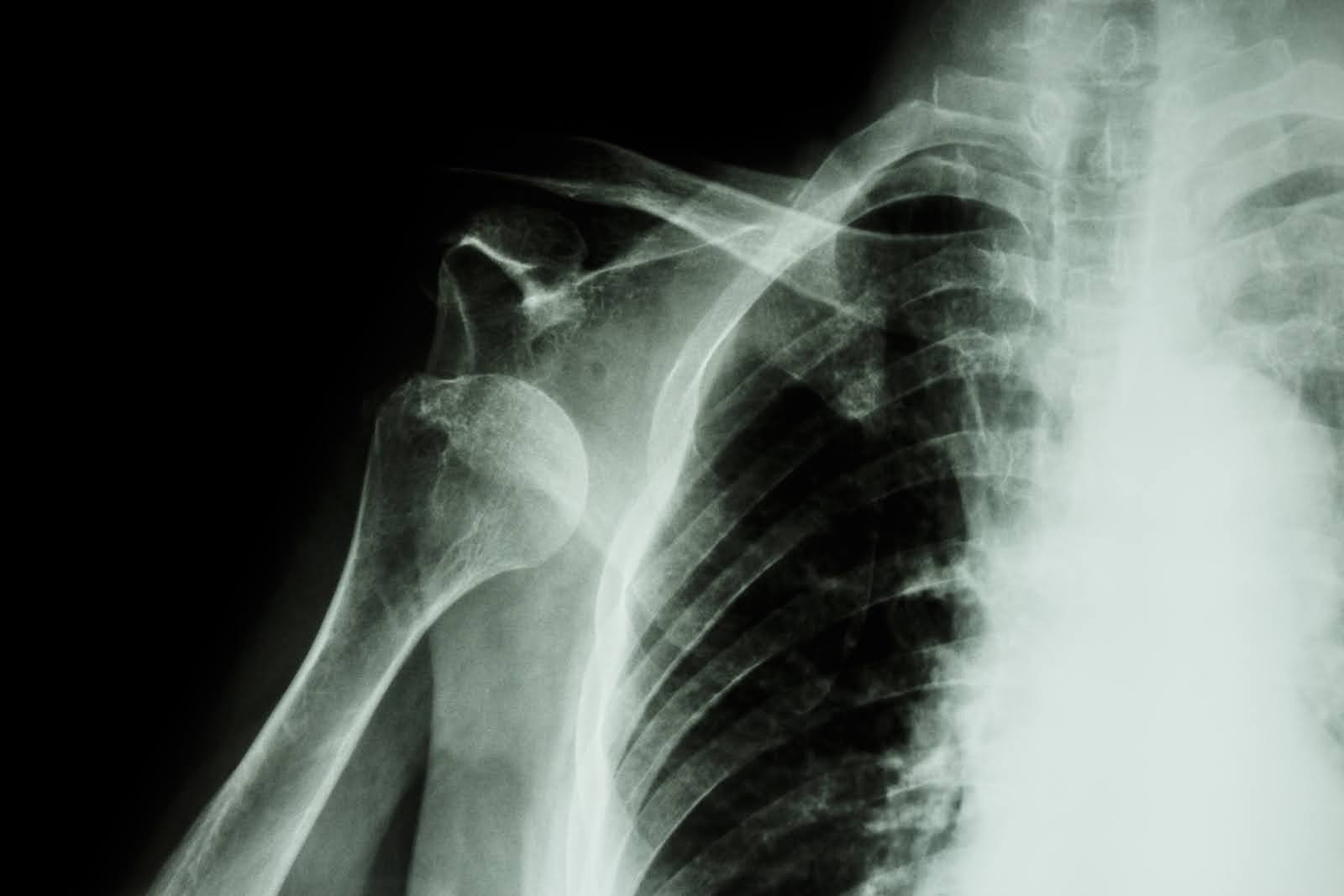
If you have been told you have a fractured proximal humerus, you have broken the top of your upper arm bone, the part that forms the ball of the ball-and-socket shoulder joint. It is one of the most common fractures we see, particularly after a fall onto an outstretched hand or directly onto the shoulder.
The first thing worth knowing is that most of these fractures do not need an operation at all. The pieces are often close enough together to heal in a sling. We cover that decision in detail in broken shoulder: will I need surgery?
This guide is for the smaller group whose fracture does need fixing, and who have been given a choice, or want to understand the choice, between two ways of doing it: a plate on the outside of the bone, or a nail down the inside of it. Both are well-established operations. They differ mainly in how the surgeon gets to the bone, and that difference has real consequences for the first few weeks.
Surgery comes into the conversation when the broken pieces have moved far enough out of position that leaving them would give you a shoulder that is stiff, weak, painful or misshapen. The things that push towards an operation are:
A CT scan is usually needed to see the pattern properly, because a plain X-ray can hide how the pieces sit in three dimensions. That scan, more than anything else, determines which implant is the right one.
A plate is a shaped piece of metal, usually titanium, that sits on the outer surface of the bone and holds the fragments in place with screws that lock into it. Stitches can also be passed through the plate and around the rotator cuff tendons to pull the tuberosities back where they belong.
To put a plate on, the surgeon needs to see the outside of the bone, which means a single long incision at the front or side of the shoulder, commonly around ten centimetres, and working between or through the muscle layers to expose the fracture. That access is the point of the operation: it lets the surgeon see the fragments directly and reduce them under vision.
The trade-off is that a bigger opening disturbs more soft tissue. That tends to mean more bleeding during the operation, a sorer first few weeks while the disturbed muscle recovers, and a larger scar down the front or side of the shoulder.
Long bones are hollow, and that hollow centre can carry an implant. An intramedullary nail is a metal rod passed down the inside of the humerus from the top, then locked in place with screws that pass through the bone and through the nail.
Because the implant travels inside the bone rather than sitting on it, the surgeon does not need to expose the whole fracture. The operation is usually done through three or four small incisions, each around ten millimetres, using X-ray guidance in theatre to reduce the fracture and position the nail and the screws. Less soft tissue is disrupted and damaged, and there is generally less bleeding, and the scars left on the skin are small.
Which side of that table your fracture sits on is a question about your scan rather than your preference, and it is worth having answered properly. A consultation is an assessment, not a commitment to surgery. You can book an appointment with Mr Baring here.
This is the thing to hold on to when you compare the two operations.
A broken proximal humerus takes somewhere around six weeks to unite, and considerably longer than that for the shoulder to feel like yours again. That timetable belongs to the bone. It is not set by whether the metal holding it went in through one incision or four.
What the smaller approach genuinely gives you is an easier journey in and out: less muscle disturbed, less bleeding, usually a more comfortable first few weeks and, in many cases, the ability to start moving the shoulder sooner under your physiotherapist's guidance. Those are real advantages and they matter. They are not the same as faster healing, and anyone who tells you a nail will heal your bone quicker than a plate is overselling it.
Both operations carry risk, and you should hear it plainly before you consent to either.
Common to both: infection, stiffness, ongoing pain, injury to the nerves or vessels around the shoulder, blood clots, anaesthetic complications, and the possibility that the fracture does not unite or slips out of position and needs a second operation. The blood supply to the humeral head can also be damaged by the injury itself, which can cause the bone to collapse over the following months, and that risk comes from the fracture rather than from the implant.
More specific to plates: the larger wound carries somewhat more infection risk, screws can occasionally cut through soft bone at the top of the humerus, and prominent metalwork sometimes irritates.
More specific to nails: some fracture patterns simply cannot be held adequately from the inside.
Mr Baring will go through the risks that apply to your fracture, your bone quality and your general health before you decide anything.
In my experience:
What about a fracture determines the surgical management?
I look at three things: the fracture pattern on the CT scan, the quality of the bone, and what the patient needs the arm to do afterwards. If I can hold the fracture properly from the inside, I will, because I would rather not open the shoulder and disturb muscle and other soft tissue that has to work again. But I am fixing the fracture, not the scar. If the head is split or the tuberosities have pulled well away, then a different approach may be used, not necessarily using a plate, but it will require an open, larger incision. I explain that reasoning to every patient, with their own scan on the screen.
The broad shape of recovery is similar whichever implant is used, and your own plan will be set by Mr Baring and your physiotherapist.
Weeks 0 to 3. A sling, day and night at first, with regular pain relief. You can usually use the hand and elbow straight away for light things at waist height. Gentle pendulum movements should start in the first week but if the shoulder is comfortable enough then early gentle mobilisation can be allowed..
Weeks 3 to 6. The sling comes off during the day for exercises, and assisted movement increases as the fracture becomes sticky. X-rays check the position is holding.
Weeks 6 to 12. The fracture is usually united enough to move the arm under its own power. Physiotherapy shifts from protecting to restoring range.
Months 3 to 12. Strengthening, then a graded return to sport, driving and heavier work. Shoulders after a fracture keep improving for a good year, and stiffness is the thing that takes longest to shift.
Getting the physiotherapy going at the right moment is a large part of the result. A shoulder that is protected too long gets stiff, and a shoulder pushed too hard too early risks the fixation.
Fractures are time-sensitive in a way most shoulder problems are not. Once the pieces start to knit in the position they are in, moving them becomes harder, and after a few weeks the decision has effectively been made for you. If you have been diagnosed in A&E and are waiting for a follow-up appointment to find out whether you need surgery, that is a reasonable moment to get a second opinion quickly rather than eventually.
Mr Baring sees fracture patients in London, usually within days, and can review your existing X-rays or arrange a CT scan. You can read more about this side of his practice on the trauma and fracture management page. Consultations are covered by all major private medical insurers, including Bupa, AXA Health, Aviva and Vitality, and self-paying patients are welcome.
Book an appointment or call 07561 812 682.
Is a nail better than a plate for a broken shoulder? Ideally yes due to a shorter operation duration and less soft tissue damage, which reduces the risk of infection and scarring and should lead to a quicker recovery. Not all shoulder fractures can be treated with a nail alone.
Will the metal have to come out later? Usually not. Nails are designed to stay. Metalwork is removed when it causes symptoms, for example a prominent screw or irritation at the top of the shoulder, and that is a smaller second operation if it becomes necessary.
Will the implant set off airport security? Not usually, due to modern detectors and titanium implants. If you are asked, saying you have had shoulder fracture surgery is normally enough.
How long does a fractured proximal humerus take to heal? The bone usually unites in around six weeks, whether you have had surgery or not. Getting movement and strength back takes longer, often the better part of a year, and that part is driven by physiotherapy rather than by the fracture.
Can I still have surgery if my fracture happened a few weeks ago? Sometimes, but the window narrows. Once the fragments start uniting in their current position, the operation becomes more involved and the result less predictable. If you are unsure whether your fracture is healing acceptably, it is worth having the X-rays reviewed sooner rather than later.
Mr Toby Baring is a consultant orthopaedic surgeon specialising in shoulder and elbow surgery, with a particular interest in arthroscopic rotator cuff repair, shoulder instability surgery and shoulder replacement.Read more about Mr Baringorbook an appointment.